Impactful cooperation with industry and farmers.
In our annual regenerativity report, we open up the impacts of our cooperation with industry and farmers. Our cooperation has a positive impact not only on material efficiency in industry, but also on sustainable domestic food production and the environment.
Together with our partners, we make the circular economy a reality – and replace virgin raw materials with recycled ones.
Recycled nutrients.
Circular economy fertilizers strengthen domestic food production.

Nitrogen (N) and phosphorus (P) are the most essential nutrients in crop production, and without them, there is no food. Nitrogen is produced energy- and emission-intensively from the atmosphere with fossil fuels, while the limited and dwindling phosphorus is extracted from the earth. We are in a situation where nitrogen and phosphorus cycles have exceeded planetary boundaries, i.e. too much of them are in circulation relative to the limits of the Earth’s carrying capacity.
Through the utilization of side streams, recycled nutrients were supplied to food production in 2024 to replace virgin nutrients as follows:
· 773 340 kg nitrogen (N)
· 439 590 kg phosforus (P)
· 535 530 kg kalium (K)
In addition to the primary nutrients, we recycled and recovered a total of 290 160 kg of sulphur (S), and 28 412 550 kg of calcium.
Water bodies.
A good soil retains nutrients.

Excess nutrients, especially phosphorus and nitrogen, accelerate eutrophication and thus the growth of algae, among other things, when they run into water bodies. Soilf in a good condition retains water and nutrients better than soil in poor condition. The use of fibre and structure lime reduces nutrient leaching from fields by up to 50%*.
Soilfood’s Soil Improvement Fibres and Strukture Limes, processed from industrial by-products, were used on 6 529 hectares to improve soil fertility and reduce nutrient leakage into water bodies.
*Rasa, K, Pennanen, T, Peltoniemi, K, et al. Pulp and paper mill sludges decrease soil erodibility. J. Environ. Qual. 2021; 50: 172– 184.
Carbon.
Good soil produces a good crops.

A significant factor in producing a good crops is the organic matter in arable soil, more than half of which consists of carbon. Currently, fertile soil is being lost worldwide faster than it is formed. Over the past 40 years, one-third of the world’s arable land has become infertile. Since 1974, mineral soils in Finland have lost an average of 220 kilograms of carbon per hectare annually. On peatlands, the rate of carbon loss is nearly ten times higher.
With Soilfood products, a total of 17 785 940 kilograms of carbon was spread on arable lands via soil improvement fibers refined from industry side streams. This amount corresponds to the average carbon loss of 80 845 hectares of mineral soil.
On average, one fiber treatment adds approximately 3 000 to 5 000 kilograms of carbon per hectare to the soil. Part of the carbon spread on the field decomposes, feeding the soil biota, while part of it bind to the soil long-term.
Climate.
Circular economy is also climate action.

We annually assess the carbon footprints of the products we deliver. The carbon footprint of recycled materials and products refined from industry side streams is, at best, only a fraction of the emissions of equivalent virgin products. For example:
· Soilfood Effective Lime emissions are 19 kg CO₂-eq. per tonne of product.
· Soilfood Newera Active Lime emissions are 20 kg CO₂-eq. per tonne of product.
· Soilfood Boost NPKS fertilizer emissions are 55 kg CO₂-eq. per tonne of product.
· Soilfood Soil Improvement Fibre emissions are 11 kg CO₂-eq. per tonne of product.
The carbon footprint of Soilfood products in 2024 was 3 262 tonnes CO₂-eq.
These figures include the production of raw materials, utilizations, transportation, and potential field application. Circular economy products help reduce emissions both in production and also in the final product.
In addition, Soilfood’s soil improvers and fertilizers have recycled 17,8 million kilograms of carbon, part of which binds to the soil long-term.
Download detailed information regarding the calculation principles for reporting >
Customer Satisfactions.
The foundation of everything we do.
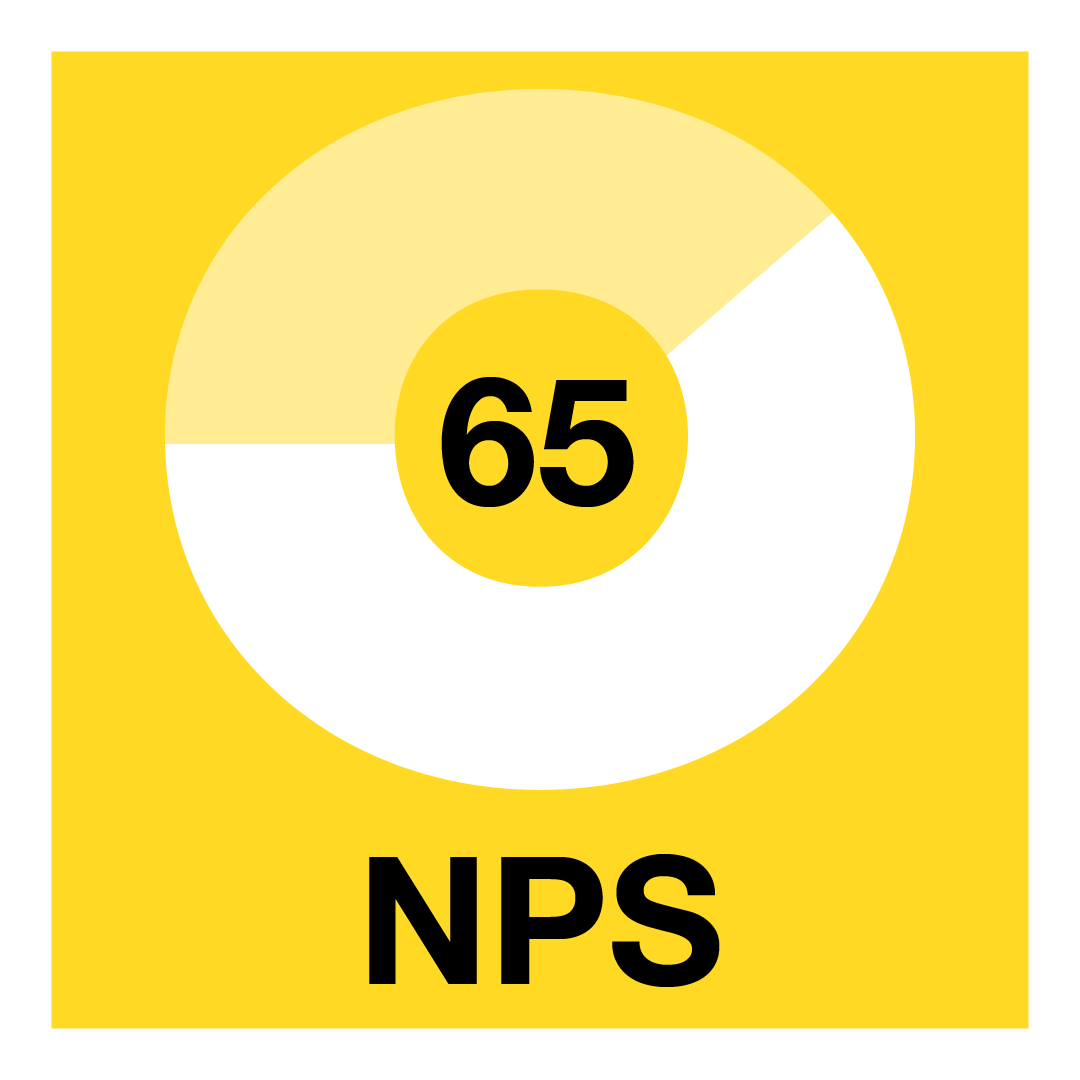
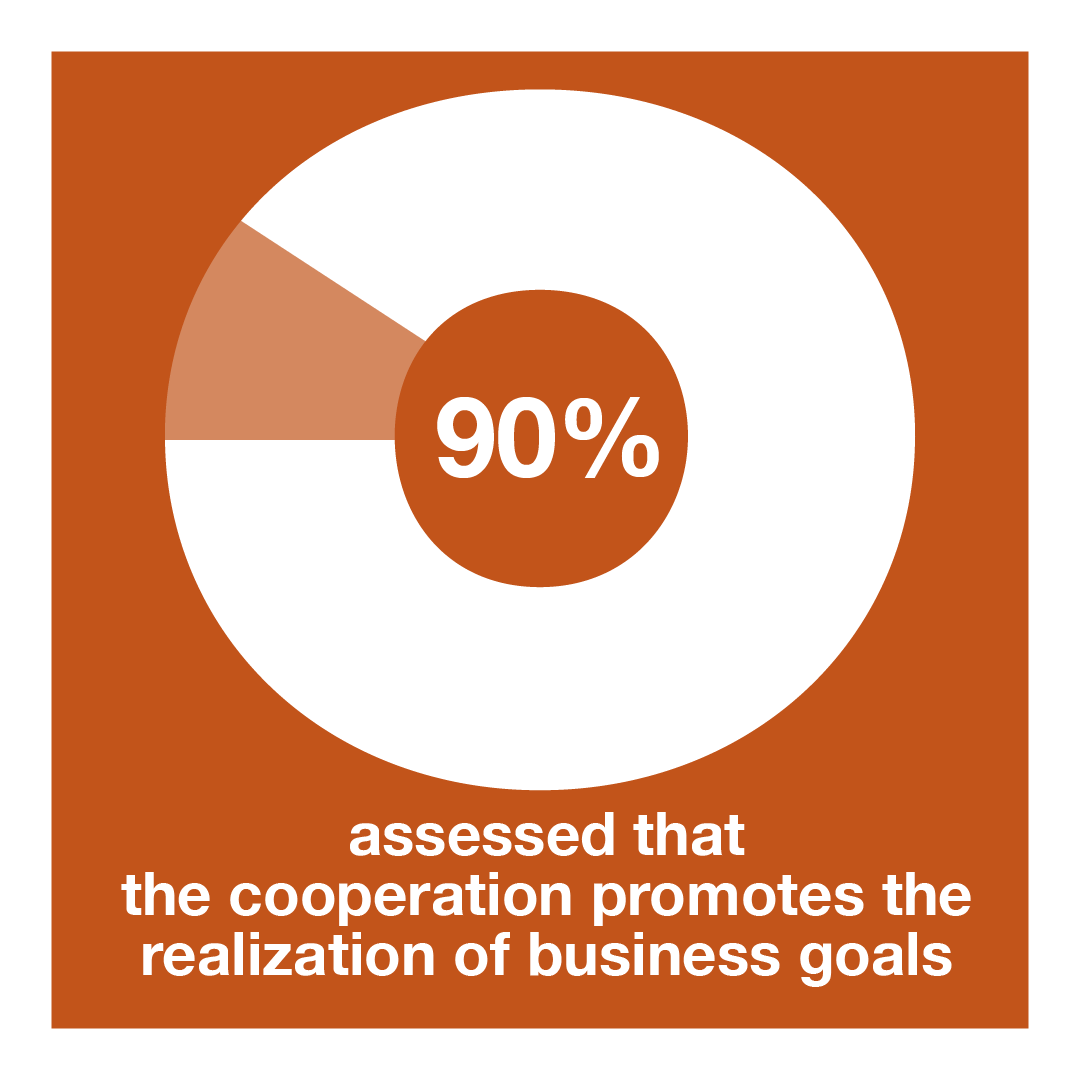
We are committed to customer satisfaction, and this commitment is clearly reflected in our results. The satisfaction level among our industrial customers is at an all-time high: in the 2024 customer satisfaction survey, we received a Net Promoter Score (NPS) of 65. The key drivers behind the recommendations include operational excellence, reliability as a business partner, and fulfillment of commitments made at the point of sale. Since 2018, the survey has been conducted by Innolink Oy.
Thank You for the cooperation